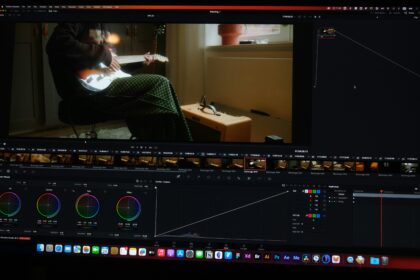



A strategic evaluation of the 2025 creative landscape: balancing the speed of AI automation against the precision of industry standard tools.
- INTRODUCTION
- CONTEXT AND BACKGROUND
- WHAT MOST ARTICLES MISS
- CORE ANALYSIS: THE THREE TITANS OF 2025
- 1. CapCut Desktop — The Speed Demon
- 2. DaVinci Resolve 20 — The Cinematic Workhorse
- 3. Adobe Premiere Pro — The Industry Standard
- SYSTEM REQUIREMENTS AND PERFORMANCE
- SAMPLE PROJECT WALKTHROUGH: THE BEGINNER JOURNEY
- RISKS AND TRADE OFFS
- FORWARD LOOKING PERSPECTIVE
- KEY TAKEAWAYS
- EDITORIAL CONCLUSION
- REFERENCES AND SOURCES
INTRODUCTION
In the digital economy of 2025: video is no longer an optional skill: it is the primary language of communication. Whether you are a student creating content for social platforms: a marketer producing corporate training: or an aspiring filmmaker: the software you choose acts as the bridge between your imagination and the screen. However: the market is currently saturated with options that range from simple drag and drop mobile ports to complex: Hollywood grade suites that can feel like learning a new language.
The challenge for a beginner is finding the “Sweet Spot” between ease of use and long term growth. You do not want a tool so simple that you outgrow it in a month: nor do you want a tool so complex that it stifles your creativity with technical frustration. This article provides a high depth analysis of the leading contenders in 2025: specifically looking at DaVinci Resolve: CapCut: and Adobe Premiere Pro. We will break down the learning curves: the hardware requirements: and the strategic reasons why you might choose one over the others.
CONTEXT AND BACKGROUND
The video editing landscape has undergone two major shifts in the last few years. First is the “CapCut Phenomenon:” where mobile first tools have successfully migrated to the desktop: bringing professional level AI features like auto captioning and background removal to the masses. Second is the democratization of high end color grading and visual effects through DaVinci Resolve: which has disrupted the traditional subscription model dominated by Adobe.
As we move through 2025: the “Baseline Expectation” for video quality has skyrocketed. Viewers now expect 4K resolution: smooth transitions: and high fidelity audio even from beginner creators. This has forced software developers to integrate artificial intelligence at every level. Modern “Beginner” software now includes tools that automatically balance audio: sync multi camera shoots: and even generate b-roll based on transcripts. Choosing a software in 2025 is as much about choosing your “AI Assistant” as it is about choosing your timeline interface.
WHAT MOST ARTICLES MISS
Most beginner guides suggest “starting small” with basic tools like iMovie or Windows Clipchamp. While these are excellent for a weekend project: they often represent a dead end for anyone serious about the craft. The “Switching Cost” in video editing is high: once you learn the keyboard shortcuts and logic of one system: moving to another can feel like a major setback.
A common oversight is the “Hardware Debt.” Beginners often choose a professional tool like DaVinci Resolve without realizing that it requires a significant GPU (Graphics Processing Unit) to function smoothly. Another missed nuance is the “Subscription Trap.” Adobe Premiere Pro is powerful: but its monthly cost can be a heavy burden for a hobbyist compared to the one time purchase of DaVinci Resolve Studio or the “Free Forever” tier of the standard version. We will focus on the “Growth Path”—which tool will still be useful to you three years from now.
CORE ANALYSIS: THE THREE TITANS OF 2025
1. CapCut Desktop — The Speed Demon
CapCut has evolved from a TikTok companion into a powerhouse for short form and social content. It is designed for “Instant Gratification.”
- The Logic: Everything is template driven. If you want a specific “look” or a trending transition: it is usually a single click away.
- Key Features: Best in class auto captions: AI face retouching: and a massive library of royalty free music and stickers.
- Learning Curve: Extremely Low. If you can use a smartphone: you can use CapCut Desktop within thirty minutes.
- Who It Is For: Social media managers: YouTubers focused on Shorts/Reels: and anyone who needs to turn around a video in under an hour.
2. DaVinci Resolve 20 — The Cinematic Workhorse
Blackmagic Design’s DaVinci Resolve is unique because its “Free” version is actually a professional grade tool without watermarks.
- The Logic: It is built around “Pages.” You have a dedicated page for Cutting: Editing: Fusion (Visual Effects): Color (Color Grading): and Fairlight (Audio).
- Key Features: Industry leading color correction and a “Neural Engine” that handles object tracking and depth mapping with incredible accuracy.
- Learning Curve: High. The interface is “Button Dense” and can be intimidating. However: learning Resolve is a professional investment that pays off in high end production value.
- Who It Is For: Aspiring filmmakers: high end YouTube creators: and those who want total control over the “Look” of their footage.
3. Adobe Premiere Pro — The Industry Standard
Despite the rise of competitors: Premiere Pro remains the most used software in professional creative agencies.
- The Logic: It is built for “Interoperability.” It works seamlessly with After Effects (Motion Graphics): Photoshop: and Audition.
- Key Features: “Text Based Editing” allows you to edit your video by simply deleting words in the transcript. Its “Auto Reframe” is excellent for turning horizontal videos into vertical ones.
- Learning Curve: Moderate. It is more logical than Resolve for many beginners: but it requires a structured approach to learn its vast array of panels and windows.
- Who It Is For: Professionals looking for work in the industry: or those who already pay for the Adobe Creative Cloud suite.
SYSTEM REQUIREMENTS AND PERFORMANCE
Video editing is the most hardware intensive task a computer can perform. In 2025: the requirements have shifted toward VRAM (Video RAM) and Apple Silicon optimization.
| Requirement | CapCut | Adobe Premiere Pro | DaVinci Resolve |
| Minimum RAM | 8 GB | 16 GB | 16 GB (32 GB for 4K) |
| GPU Focus | Low (Optimized for Mobile) | Moderate (CUDA/OpenCL) | Extremely High (Needs VRAM) |
| Storage | 2 GB for Install | 8 GB for Install | 5 GB for Install |
| Best Hardware | Any modern laptop | Apple M3/M4 or RTX 40-series | NVIDIA RTX 40-series (Windows) |
SAMPLE PROJECT WALKTHROUGH: THE BEGINNER JOURNEY
If you were to start your first project today: here is how the experience differs:
- In CapCut: You drag your clips in: click “Auto Captions:” add a “Trending” filter: and export. Total time: 15 minutes. The result looks “Social Media Native.”
- In Premiere Pro: You create a “Sequence:” use “Text Based Editing” to cut the rough draft: apply a “Lumetri Color” preset: and use “Essential Sound” to clean up the background noise. Total time: 45 minutes. The result looks “Professional.”
- In DaVinci Resolve: You import into the “Media Pool:” do a quick cut in the “Cut Page:” move to the “Color Page” to balance the skin tones with a power window: and use “Fairlight” to add a compressor to your voice. Total time: 90 minutes. The result looks “Cinematic.”
RISKS AND TRADE OFFS
The primary risk for beginners is “Over-editing.” Because CapCut makes effects so easy: many beginners clutter their videos with too many transitions: which can distract from the story.
For DaVinci Resolve users: the risk is “Technical Stall.” You might spend five hours trying to understand a “Node Based” workflow in the Fusion tab while your actual story remains untold. For Premiere Pro users: the risk is “Stability.” Despite improvements: Premiere still suffers from occasional crashes on Windows machines: making “Ctrl+S” (Save) a mandatory reflex.
FORWARD LOOKING PERSPECTIVE
By 2026: we expect the distinction between “Free” and “Pro” to blur further. We are seeing the rise of “Generative Fill” in video: where you can tell the software to “Add a coffee cup to the table” or “Change the sky to sunset.”
DaVinci Resolve is currently leading the way in integrating these features into a traditional timeline. Meanwhile: Adobe is focusing on “Cloud Collaboration:” allowing an editor in London and a producer in New York to work on the same timeline in real time. The ultimate winner for beginners will be the software that makes “Technical Complexity” invisible while keeping “Creative Control” in the hands of the user.
KEY TAKEAWAYS
- Start with CapCut if your goal is speed: social media: and ease of use. It is the best “Value for Time” tool in 2025.
- Choose DaVinci Resolve if you want to be a professional filmmaker or want a high end tool for free. Be prepared for a steeper learning curve.
- Go with Adobe Premiere Pro if you are entering the professional workforce or need a tool that integrates with the rest of the Adobe ecosystem.
- Hardware is the bottleneck: Always check your GPU and RAM before committing to DaVinci Resolve.
- Master the “Cut” first: No amount of AI effects or color grading can save a video with poor pacing and a weak story.
EDITORIAL CONCLUSION
The journey from a beginner to a pro video editor is no longer a linear path. In 2025: you can produce world class content on a variety of platforms. The “Best” software is simply the one that stays out of your way and allows you to tell your story. If you are just starting: do not be afraid to experiment with CapCut for a few weeks to learn the basics of pacing: then transition to Resolve or Premiere when you feel the tool is limiting your vision. The software is just a brush: you are the artist.
REFERENCES AND SOURCES
- Best Video Editing Software for Beginners 2025 — TechRadar Review
- CapCut vs DaVinci Resolve for New Creators — Reddit NewTubers Analysis
- Adobe Premiere Pro 2025: New Features and AI Integration — PCMag
- DaVinci Resolve 20 System Requirements and Benchmarks — Puget Systems
- The Rise of AI in Video Editing: Trends for 2025 — Miracamp Guide