



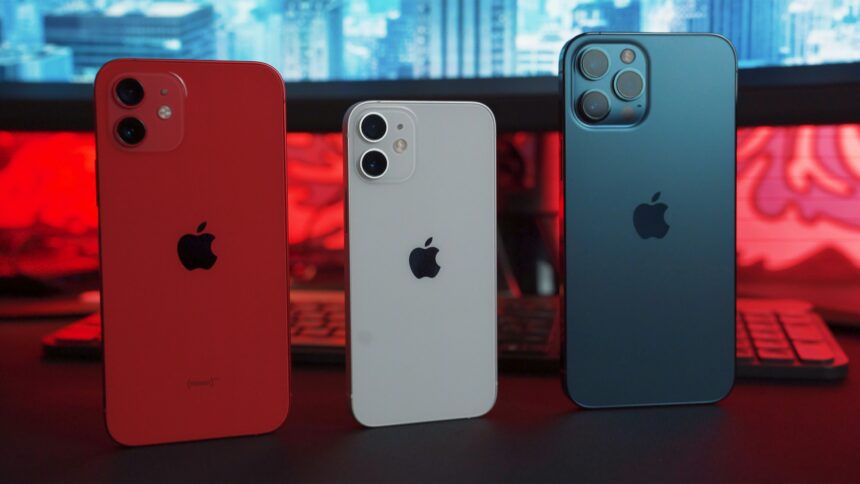
From the 200MP camera myth to the “Silicon-Carbon” battery revolution: a deep dive into making a future-proof investment in the age of On-Device AI.
- INTRODUCTION
- THE CAMERA MYTH: MEGAPIXELS vs. SENSOR PHYSICS
- PROCESSOR AND RAM: THE AI TAX OF 2026
- THE BATTERY REVOLUTION: SILICON-CARBON CHEMISTRY
- COMPARISON: SMARTPHONE TIERS IN 2026
- BEYOND “BRIGHTNESS”
- 5G AND FUTURE-PROOFING: WHAT IS “TRUE” CONNECTIVITY?
- SOFTWARE: THE “7-YEAR PROMISE”
- STORAGE SPEEDS (UFS 4.0)
- THE “RIGHT TO REPAIR” SCORE
- KEY TAKEAWAYS
- CONCLUSION
- REFERENCES AND SOURCES
INTRODUCTION
By late 2026: the smartphone has ceased to be a mere communication tool and has transitioned into a “Personal AI Compute Engine.”
We are no longer living in the era of incremental hardware updates where a slightly faster processor or a marginally brighter screen defines a “New Generation.”
In 2026: the value of a smartphone is measured by its “Longevity” and its ability to handle “On-Device Large Language Models (LLMs).”
The market has reached a fascinating crossroads. On one hand: flagship prices have stabilized at the “Thousand Dollar” mark: pushed upward by the cost of specialized AI silicon and titanium frames. On the other: the “Mid-Range” category has become so powerful that the average user often struggles to justify the “Pro” or “Ultra” price tag.
This guide is designed to cut through the marketing noise of 2026. We will deconstruct why more megapixels might actually lead to worse photos: why 8GB of RAM is the new “Absolute Minimum”: and how a new chemistry called “Silicon-Carbon” is finally killing battery anxiety.
Whether you are an iPhone loyalist or an Android power user: these are the features that will determine if your phone is still relevant in 2030.
THE CAMERA MYTH: MEGAPIXELS vs. SENSOR PHYSICS
In 2026: the “Megapixel War” has reached a fever pitch: with the Samsung Galaxy S25 Ultra and several Chinese flagships sporting 200MP sensors. However: for the discerning buyer: the number of pixels is often the least important factor in photo quality.
1. The “Pixel Binning” Reality
Most 200MP cameras do not actually produce 200-million-pixel images by default. Instead: they use “Tetra2pixel” or “Adaptive Pixel” technology to combine 16 smaller pixels into one “Super Pixel.”
The physics of light ($L_c$) can be summarized as:
$$L_c \propto A_{pixel}$$
Where $A_{pixel}$ is the surface area of the individual pixel. Small: cramped pixels on a high-megapixel sensor often struggle with “Noise” in low light. A 2026 flagship with a 1-inch sensor (like the Oppo Find X8 Ultra) at 50MP will almost always outperform a 200MP sensor with a smaller physical footprint because it can “Gather More Light.”
2. Why “Optical Zoom” Trumps “Digital Zoom”
The biggest camera trap in 2026 is the “100x Space Zoom” label. Digital zoom is simply “Cropping and Enhancing”: which leads to a “Painting-like” texture.
- Periscope Lenses: Look for phones with a dedicated “Periscope Telephoto” lens. In 2026: the gold standard is a 5x or 10x Optical Zoom. * Variable Aperture: High-end models now feature “Mechanical Apertures” that physically open and close. This allows for natural “Bokeh” (background blur) that isn’t faked by software.
PROCESSOR AND RAM: THE AI TAX OF 2026
For the first time in a decade: “RAM” (Random Access Memory) actually matters for the average consumer. In previous years: 8GB was plenty. In 2026: it is the “Floor.”
1. The “On-Device AI” Requirement
Modern features like “Real-Time Voice Translation”: “Magic Image Expansion”: and “Personalized AI Assistants” (like the updated Siri or Google Gemini) require the AI model to live in the phone’s memory.
- The “RAM Reservoir”: These models can take up 3GB to 5GB of RAM just to sit in the background.
- The Verdict: If you plan to keep your phone for more than two years: 12GB of RAM is the recommended baseline. Phones like the Pixel 10 Pro have moved to 16GB specifically to ensure their AI tools don’t slow down the rest of the interface.
2. Silicon Power: Snapdragon 8 Elite vs. Apple A19 Pro
The 2026 chipsets are built on the 3-nanometer (3nm) process.
- Snapdragon 8 Elite: This is the “Performance King” for 2026: focusing on “Oryon” CPU cores that handle multitasking better than any previous Android chip.
- Apple A19 Pro: Apple continues to lead in “Efficiency.” While it might not win in raw peak speed: it maintains its performance for longer periods without “Thermal Throttling” (getting hot and slowing down).
THE BATTERY REVOLUTION: SILICON-CARBON CHEMISTRY
For years: battery capacity was stuck at 5,000mAh. In 2026: a breakthrough has occurred. The transition from “Graphite Anodes” to “Silicon-Carbon Anodes” has allowed manufacturers to increase energy density by 20 to 30 percent without increasing the phone’s size.
Battery Expectations for 2026:
- Flagship Capacity: Look for phones hitting the 5,500mAh to 6,000mAh range. The OnePlus 15 and Xiaomi 15 Pro have proven that a slim phone can now last two full days.
- Charging Speed: In 2026: “Fast Charging” should be at least 45W (Apple/Samsung) or 100W+ (OnePlus/Xiaomi). A full charge in 2026 should take no longer than 30 to 40 minutes.
- The “Cycle Life” Metric: Don’t just look at capacity; look at “Health Retention.” Modern batteries are rated for 1,600 cycles (about 4 years of use) before dropping below 80 percent health.
COMPARISON: SMARTPHONE TIERS IN 2026
| Feature | Budget ($200-$400) | Mid-Range ($500-$800) | Flagship ($900+) |
| Processor | Snapdragon 6 Series | Snapdragon 8s Gen 3 | Snapdragon 8 Elite / A19 Pro |
| RAM | 6GB – 8GB | 8GB – 12GB | 12GB – 24GB |
| Camera | 50MP (Main Only) | 50MP + Ultrawide | Triple/Quad (Periscope Zoom) |
| Display | 90Hz LCD/OLED | 120Hz LTPO OLED | 120Hz-144Hz LTPO (3000+ nits) |
| Battery | 5,000mAh (Standard) | 5,500mAh (Silicon-Carbon) | 5,000mAh – 6,000mAh |
| Updates | 2 – 3 Years | 4 – 5 Years | 7 Years (Industry Standard) |
BEYOND “BRIGHTNESS”
Every manufacturer in 2026 claims “3,000 Nits of Peak Brightness.” This is a “Laboratory Number” that only applies to a tiny portion of the screen for a few seconds. What actually matters is “SDR Typical Brightness” and “PWM Dimming.”
1. LTPO (Low-Temperature Polycrystalline Oxide)
This is a must-have for 2026. LTPO allows the screen to change its refresh rate from 1Hz to 120Hz dynamically.
- The Benefit: When you are looking at a static photo: the screen drops to 1Hz: saving massive amounts of battery.
- The Buying Advice: Do not buy a phone in 2026 for over 600 dollars that does not have an LTPO panel.
2. Eye Comfort: PWM Dimming
If you get headaches from looking at your phone: look for “High-Frequency PWM Dimming” (above 2,000Hz). Many 2026 screens use a “Strobe” effect to dim the light: which can cause eye strain. Newer panels from BOE and Samsung Display have fixed this: but it’s a hidden spec you must verify.
5G AND FUTURE-PROOFING: WHAT IS “TRUE” CONNECTIVITY?
By late 2026: 5G is no longer a “Feature”—it is the baseline. However: not all 5G is created equal.
- Wi-Fi 7: This is the new standard for 2026. It offers triple the speed of Wi-Fi 6E and significantly lower latency for gaming. Even if you don’t have a Wi-Fi 7 router today: having a phone that supports it ensures your device won’t be the bottleneck in 2027.
- UWB (Ultra-Wideband): This chip is essential for the “Digital Key” revolution. It allows your phone to unlock your car: track “AirTags” with centimeter precision: and act as a “Secure ID.”
- Satellite SOS: In 2026: this is no longer exclusive to iPhones. Many Android flagships now support “Two-Way Satellite Messaging”: allowing you to send texts when you are completely off the grid.
SOFTWARE: THE “7-YEAR PROMISE”
The biggest shift in 2026 is the “Longevity Pledge.” Google and Samsung have committed to 7 years of OS and Security updates. Apple usually provides 6 to 8 years.
Why this changes your buying math:
If a phone costs 1,000 dollars and lasts 7 years: the cost is roughly 142 dollars per year. If a budget phone costs 400 dollars but only receives 2 years of updates: the cost is 200 dollars per year. In 2026: the “Expensive” phone is often the more “Economical” choice when viewed through the lens of “Price per Year of Use.”
STORAGE SPEEDS (UFS 4.0)
Most buyers look at “Capacity” (128GB vs 256GB): but they ignore “Speed.” In 2026: the difference between UFS 3.1 and UFS 4.0 is massive.
- The Impact: UFS 4.0 is twice as fast and 45 percent more power-efficient.
- The Result: Apps open instantly: and the “Camera Shutter Lag” is eliminated. Avoid any phone in 2026that uses older UFS 3.1 storage if you want a “Premium” feel.
THE “RIGHT TO REPAIR” SCORE
The 2026 consumer is increasingly focused on “Repairability.” Due to new EU and US regulations: phones are becoming “Modular” again.
- The “Battery Pull-Tab”: Leading brands have replaced “Glue” with “Adhesive Strips” that allow for a battery replacement in under five minutes.
- The “Spare Parts” Market: Check if the manufacturer sells “Official Repair Kits” (like the Apple/Self Service Repair or Samsung/iFixit partnership). This can turn a “Broken Screen” catastrophe into a 50-dollar DIY fix in the future.
KEY TAKEAWAYS
- Ignore the 200MP Hype: Focus on “Sensor Size” and “Optical Zoom” range instead.
- RAM is the AI Fuel: Don’t buy an Android phone with less than 12GB if you want it to last until 2028.
- Silicon-Carbon is King: Prioritize phones with this new battery chemistry for the best endurance.
- The “7-Year Rule”: Calculate your purchase based on “Cost per Year”: not “Sticker Price.”
- LTPO is Essential: Ensure your screen is dynamic to save battery and get the best visuals.
- UFS 4.0 is the “Secret Speed”: Verify storage speed to avoid a phone that feels “Slow” after six months.
CONCLUSION
The smartphone market of 2026 has moved past the “Gimmick Age.” We no longer care about “Curved Edges” or “Holographic Screens.” We care about a device that acts as a “Cognitive Assistant”: captures memories with “Optical Integrity”: and survives a full weekend on a single charge.
The most important advice for 2026 is to “Buy for the Future: Not the Present.” AI models will only get larger: and apps will only get more demanding. By spending an extra 200 dollars today on more RAM and a better battery chemistry: you are essentially “Insurance-Proofing” your digital life. The “Perfect Smartphone” isn’t the one with the most “Megapixels”; it’s the one that still feels fast: healthy: and secure in the year 2030.
REFERENCES AND SOURCES
- Expert Reviews: Best Smartphones 2025 — Tested and Ranked
- Snapdragon: The 8 Elite Architecture and AI Engine Deep Dive (2025)
- NIST: PQC Standards and the Impact on Mobile Encryption (2025 Update)
- Digital Camera World: The End of the Megapixel War — Why 2025 Focuses on Glass
- PhoneArena: The Silicon-Carbon Battery Revolution — How Capacities Hit 6,000mAh
- CNET: How much RAM do you REALLY need for AI in 2025?